Parrot has been making drones long before drones were a serious business category. The Paris-based company, founded in 1994, spent years as a consumer gadget brand. Today, it operates as a publicly listed European leader in professional micro UAVs and photogrammetry software, generating record consolidated revenues of €79.8 million in 2025, with 6% year on year growth at constant exchange rates. That number tells a more interesting story than the headline suggests.
The company now runs two distinct businesses under one roof: professional micro UAV hardware and a software division called Pix4D. Both segments are growing, and both are targeting the same underlying demand: organizations that need reliable aerial intelligence without depending on consumer-grade tools or foreign supply chains.
The Hardware Push:
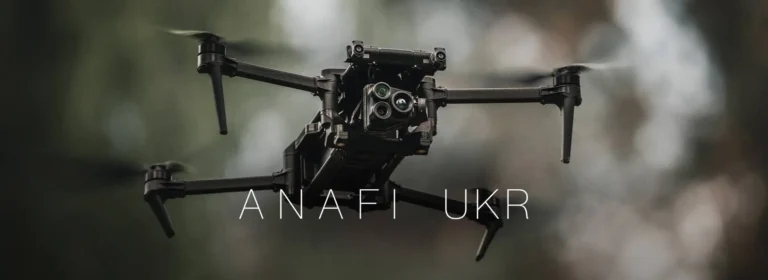
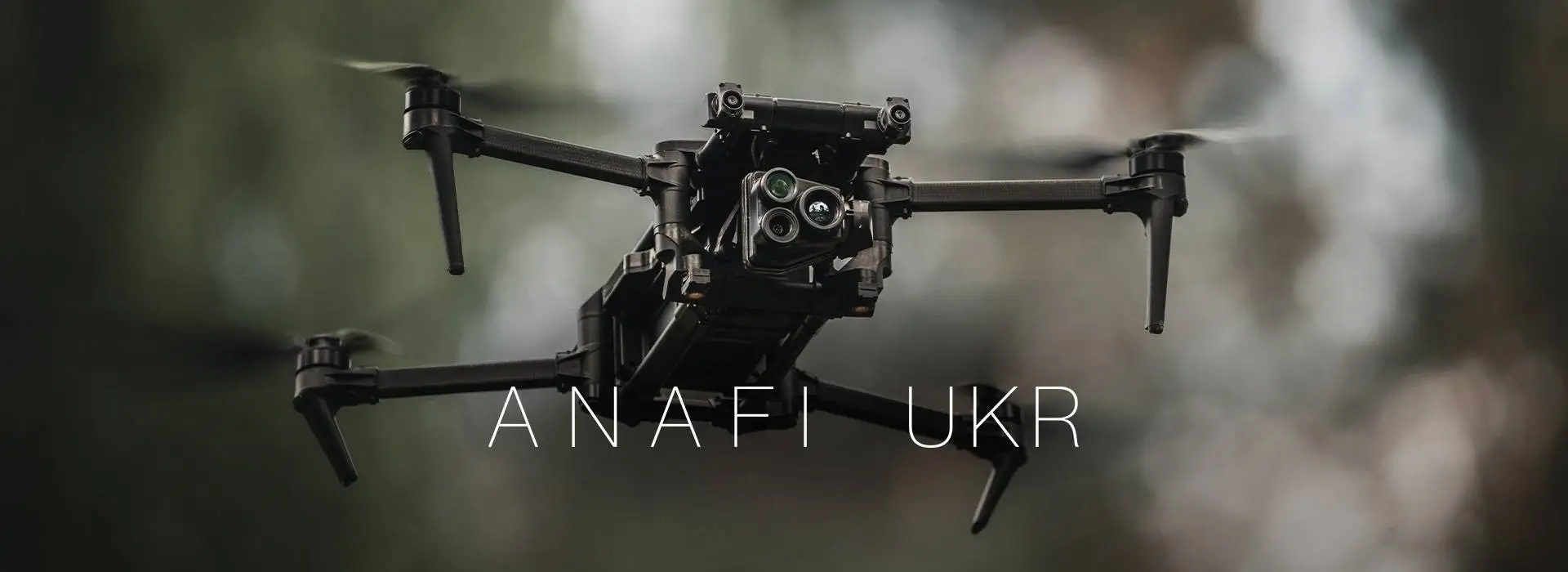
Parrot’s drone business is built around the ANAFI product line, and the most significant recent launch is the ANAFI UKR. Unveiled at the Paris Air Show in June 2025, it is a compact, AI-driven micro drone built for intelligence, surveillance, and reconnaissance. Its maximum flight time reaches 50 minutes with the XLR battery, with a maximum flight range of 40 km.
The drone is deployable in under two minutes and navigates without GPS using visual inertial odometry and satellite image matching. That matters in defense contexts where GPS jamming is common. It also features encrypted communications via dual radio with military-grade MARS frequency hopping and LoRa fallback.
The ANAFI UKR is already moving into real procurement contracts. Finland’s Defence Forces announced the procurement of the ANAFI UKR to strengthen intelligence, surveillance, and reconnaissance capabilities, with deliveries expected to begin in early 2026. The total value of the program, including VAT, is nearly €15 million.
The Software Side:
Pix4D is the part of Parrot that many people in the drone ISR or mapping space already know. It’s a suite of photogrammetry tools that converts drone or smartphone imagery into precise 2D maps, 3D models, and digital twins. The photogrammetry business recorded full-year revenues of €31.8 million in 2025, with 6% growth at current exchange rates and 11% at constant rates.
The standout product here is PIX4Dcatch, a mobile app that brings photogrammetry capture to everyday smartphones and tablets. During the first half of 2025, Pix4D introduced Gaussian Splatting technology, a 3D reconstruction method that enables highly realistic and fast renderings from point clouds, now integrated into the cloud processing of datasets captured using the Pix4Dcatch mobile app. That’s a meaningful capability jump for construction, surveying, and infrastructure teams that already carry mobile devices on site.
New software solutions accounted for more than two-thirds of photogrammetry revenue by the end of 2025, and direct sales to institutional and enterprise customers across Europe, the United States, and Japan represented approximately one-third of Pix4D sales. The shift toward subscriptions means more recurring revenue over time, which is a structural change worth noting for anyone evaluating Parrot as a long-term vendor or partner.
Where the Company Sits:
Parrot manufactures in the United States and South Korea, develops its products in Europe, and serves governments, enterprises, and operators in more than 50 countries. That geographic diversification in manufacturing is deliberate. European defense procurement increasingly favors vendors who can demonstrate supply chain independence, and Parrot’s model is built around exactly that.
For the first half of 2026, Parrot expects significant growth compared with the first half of 2025 for the micro UAV segment, with the volume of orders already secured for 2026 close to the revenues generated in the prior year from that segment. That level of forward visibility is uncommon for a hardware company of this size.
Parrot also expanded its distribution footprint in late 2025, adding five new defense and security distribution partners across Europe and the Asia Pacific region to support demand for the ANAFI UKR. That signals confidence in near-term order flow, not just pipeline.
A Two-Sided Model:
What makes Parrot’s current position interesting from a business perspective is the combination of hardware contracts and a SaaS software business under the same brand. The hardware brings in large government contracts. The software generates recurring revenue from enterprise and institutional customers. Those two models complement each other, especially as organizations that buy drones also need tools to process and act on the data those drones collect.
If you’re a startup founder, developer, or operator building anything in the geospatial, defense, or public safety space, Parrot’s dual model is worth understanding. Its Pix4D platform is available through direct sales and its distributor network, and PIX4Dcatch specifically is designed for teams that don’t need a dedicated drone operator to capture usable data. That accessibility opens up use cases in industries that haven’t historically been drone buyers. You can explore Parrot’s full product range and software solutions directly on their website at parrot.com.
Parrot has successfully repositioned itself around professional micro UAVs and photogrammetry. With record revenues in 2025, real government contracts secured, and a software business transitioning to subscriptions, it’s operating with more commercial clarity now than at any point in the last decade.
Stay ahead of the curve, explore our full Gadgets coverage.