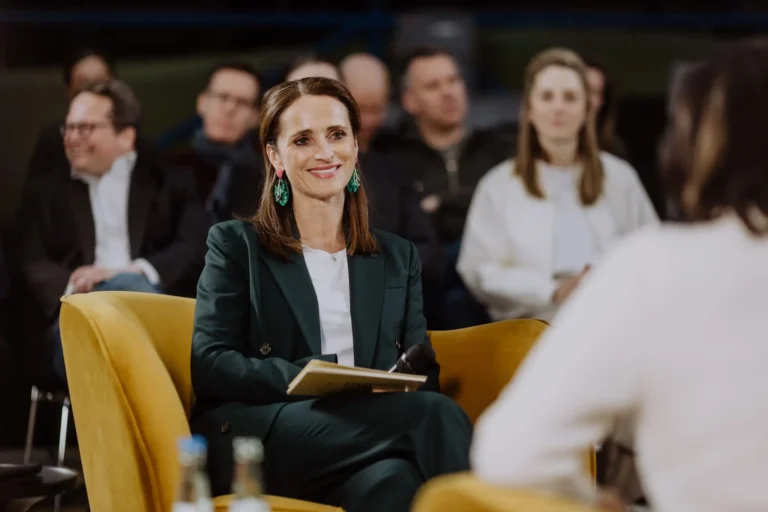
Verena Pausder is one of the clearest voices in German tech right now. She chairs the Startup-Verband, Germany’s national startup association, runs an investment firm, cofounded a women’s football club, and cohosts one of Germany’s most listened-to business podcasts. At 41, she has built a career that mixes company building, digital education, and public policy. This piece looks at what she actually does, and why founders and operators pay attention.
From Founder to Investor:
Pausder started by building products. In 2012, she cofounded Fox & Sheep, which grew into one of Germany’s largest developers of apps for children, and the toy company HABA acquired it in 2014. Earlier, she served as CEO at Goodbeans. She studied at the University of St. Gallen in Switzerland, then spent years close to the work of building and selling companies.
Her view on entrepreneurship is direct, built from what she has actually made, not theory. That tone carries into everything else she touches.
Leading the Startup-Verband:
In December 2023, Pausder was elected chairwoman of the Startup-Verband, the first woman to lead it. She came in with a board that held more women than men, a clear signal about who gets a seat at the table.
Her message has stayed steady. She wants Germany to be the most startup-friendly place in Europe, and she pushes for a culture where people take more risks. On May 21, 2026, she opened the seventh German Startup Awards at the Palais am Funkturm in Berlin, alongside Chancellor Friedrich Merz and around 700 guests. Her framing was simple. Germany talks too often about its shortcomings and too rarely about its opportunities, and the founders in that room are the people changing that.
If you follow our Women in Tech coverage, this stance is worth watching, because she frames optimism as a strategy, not a slogan.
Backing Early Companies:
Through Pausder Ventures, her investment company, she backs startups across consumer, edtech, and fintech. Public records list 18 investments, including Knowunity and simpleclub, and she holds a board seat at the fintech Bling. Her most recent reported deal was Sitegeist on 16 February 2026.
She tends to invest in areas she understands, which is part of why founders take her calls. Her work in digital education runs alongside this, and she has long argued that better tech in schools is a national priority, not a side project. She cofounded ada Learning, which focuses on leadership and digital skills.
Running a Club Like a Startup:
In the summer of 2022, Pausder and five other women took over the women’s team of FC Viktoria 1889 Berlin and spun it out as its own company. The founding group included former German international Ariane Hingst, alongside entrepreneurs and sports leaders. They run it like a startup, with a holding company that owns 75.1 percent of the operating business.
The original goal was bold: climb from the regional league to the top flight within five years. The team has since been promoted to the 2. Frauen-Bundesliga. In November 2025, the US platform Monarch Collective joined as the first global strategic investor, set to take up to 38 percent of the club over time. Monarch backs only women’s sport and also holds stakes in Angel City FC, the Los Angeles club that helped inspire the Viktoria project.
Sharing the Playbook:
With Lea-Sophie Cramer, Pausder cohosts Fast & Curious, one of Germany’s widest-reaching business podcasts. They talk about building companies, investing, business trends, and their own lives. In 2025, they took the show on a live tour, and they are bringing it back to the OMR Festival stage in Hamburg on May 5 and 6, 2026.
The podcast works because it is candid. Listeners get practical advice and honest reflection, including the real hurdles women face in leadership.
What Founders Can Learn:
Verena Pausder is interesting because she runs several things at once and keeps them connected. The Startup-Verband’s work feeds her policy voice. The investing keeps her close to early teams. The football club tests her belief that startup thinking can move other fields.
For founders, operators, and developers, her example is concrete. Build things, share what you learn, and back the next group coming up. That is the loop she keeps running, and it is why her name keeps showing up wherever German tech is being shaped.