QuantWare just closed a $178 million Series B, and the timing makes sense. The Delft based quantum processor company announced the round on May 5, 2026, right alongside the unveiling of VIO-40K, a processor architecture designed to support 10,000 qubits. That is 100 times larger than what is currently available in the market. For anyone tracking the quantum computing funding landscape, this is the largest private round ever raised by a dedicated quantum processor company.
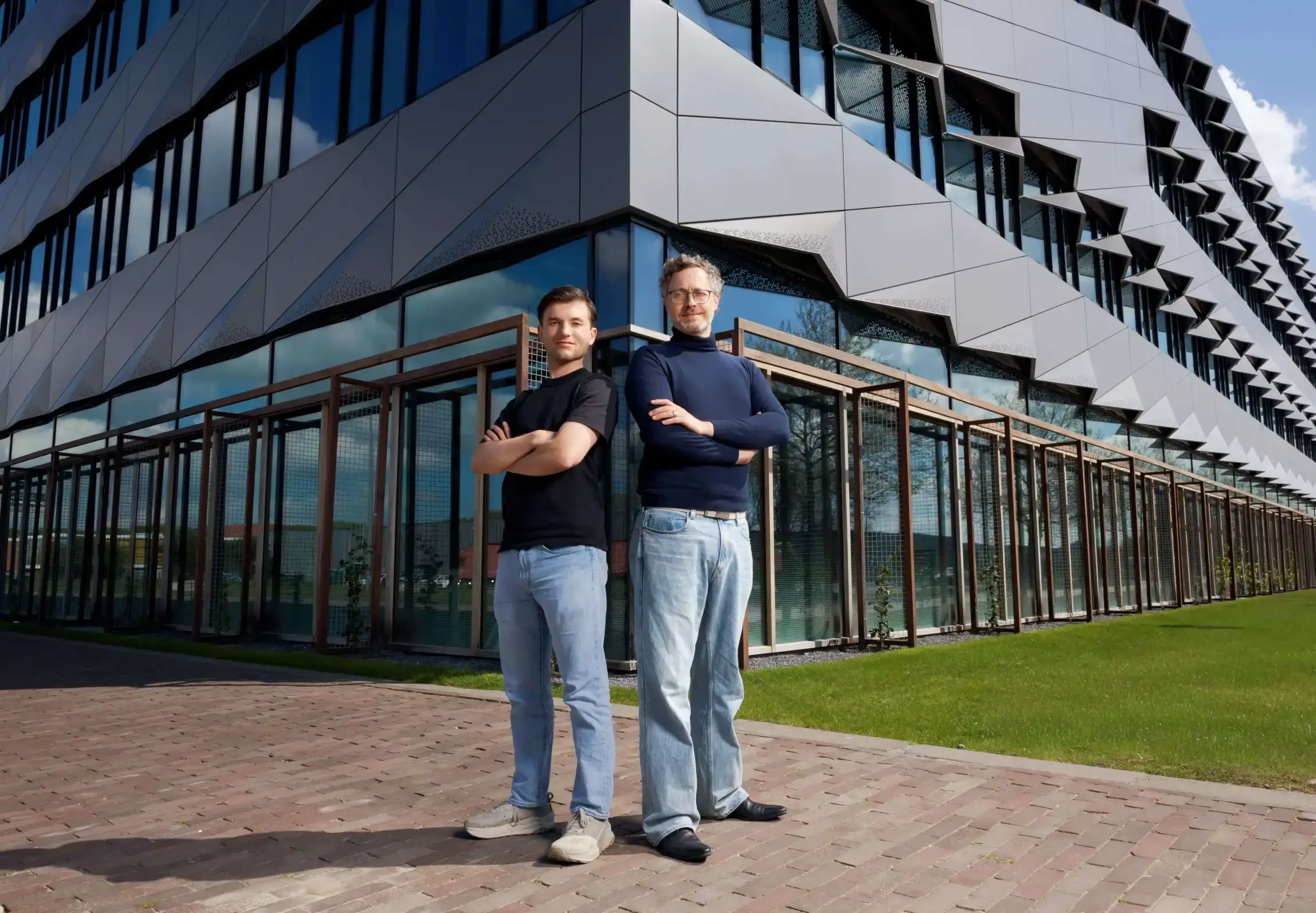
The company was founded in 2021 by Matt Rijlaarsdam and Alessandro Bruno as a spinout from QuTech at TU Delft. In under five years, QuantWare has shipped to more than 50 customers across 20 countries, which makes it the world’s largest commercial quantum processing unit supplier by volume.
The VIO Architecture Explained:
QuantWare’s core technology is VIO, a modular Quantum Processor Architecture that lets the company build processors that deliver more compute per watt. It is also designed as an open platform, meaning other companies can build their own qubit chiplets and designs on top of it. That is a notable choice because it positions QuantWare less as a closed ecosystem and more as infrastructure for the broader quantum supply chain.
The VIO-40K architecture, announced alongside this round, targets 10,000 qubit processors. The superconducting qubit space has long faced challenges around routing, packaging, and manufacturing at scale, and VIO was built specifically to address those constraints. Intel Capital’s Kike Miralles noted that QuantWare recognized this challenge early and built its architecture around it.
What KiloFab Actually Does:
The $178 million will also fund KiloFab, described as the world’s largest dedicated quantum open architecture fabrication facility. The plan is to increase QuantWare’s production capacity by 20 times to keep up with growing global customer demand. This is a manufacturing play as much as it is a technology play, and for a hardware company, production capacity is what bridges the gap between a working prototype and a viable commercial product.
QuantWare currently handles the full stack: it designs, fabricates, and integrates quantum processors. It also offers foundry services and chiplet packaging, which means quantum computing companies that want to scale on VIO’s architecture have a clear path to do so without building their own manufacturing infrastructure.
Who Backed This Round:
The round was oversubscribed and brought in several notable investors. Intel Capital joined as a new investor, alongside IQT, the strategic investor backed by the U.S. national security community, and ETF Partners. Existing investors FORWARD.one, Invest-NL DeepTech Fund, InnovationQuarter Capital, Ground State Ventures, and Graduate Ventures all participated again.
IQT’s involvement is worth noting. The organization backs technologies that are a priority for national security. Quantum computing infrastructure, specifically who controls the supply chain for quantum processors, is increasingly part of that conversation globally. FORWARD.one’s Robin van Boxsel called this the world’s largest funding round for a dedicated quantum processor company, which aligns with what QuantWare itself has stated publicly.
What This Means for the Quantum Supply Chain:
QuantWare’s model is built around being the supplier that the rest of the quantum ecosystem builds on. It is not competing with quantum computing companies for the same end users. It is offering them the hardware layer they need to scale. CEO Matt Rijlaarsdam framed it clearly: the promise of quantum computing solving complex real-world problems only becomes real once the hardware can be manufactured and deployed at scale.
That is the gap QuantWare is trying to close with this raise. KiloFab expands the production side, and the open VIO architecture keeps the platform accessible to third party developers and quantum companies who want to integrate without being locked into a proprietary ecosystem. For founders and operators watching the quantum space, this is a useful signal that the hardware supply chain for quantum processors is maturing into an actual industry with industrial-scale infrastructure behind it.
If you are researching how quantum computing companies are building their hardware stacks, understanding the role of dedicated superconducting qubit manufacturers like QuantWare is a good place to start. You can also explore how the broader quantum computing funding landscape has shifted over the past two years for more context on where capital is flowing in DeepTech.