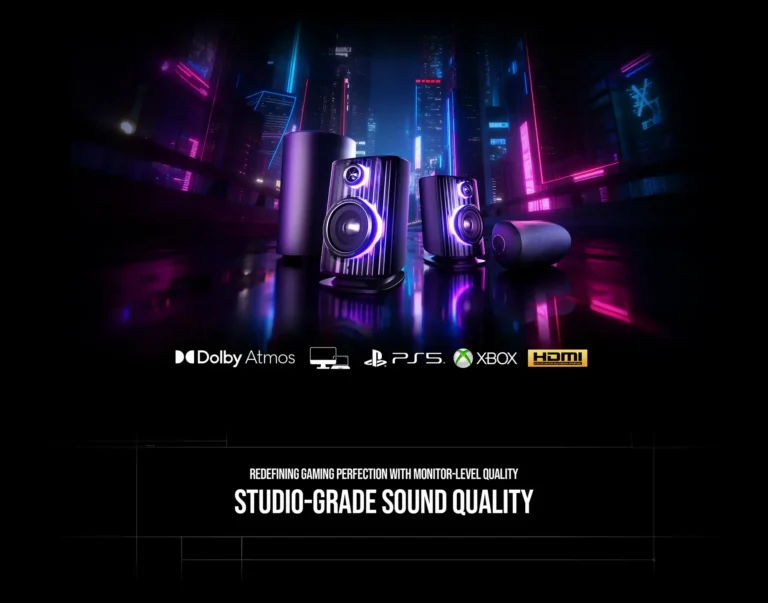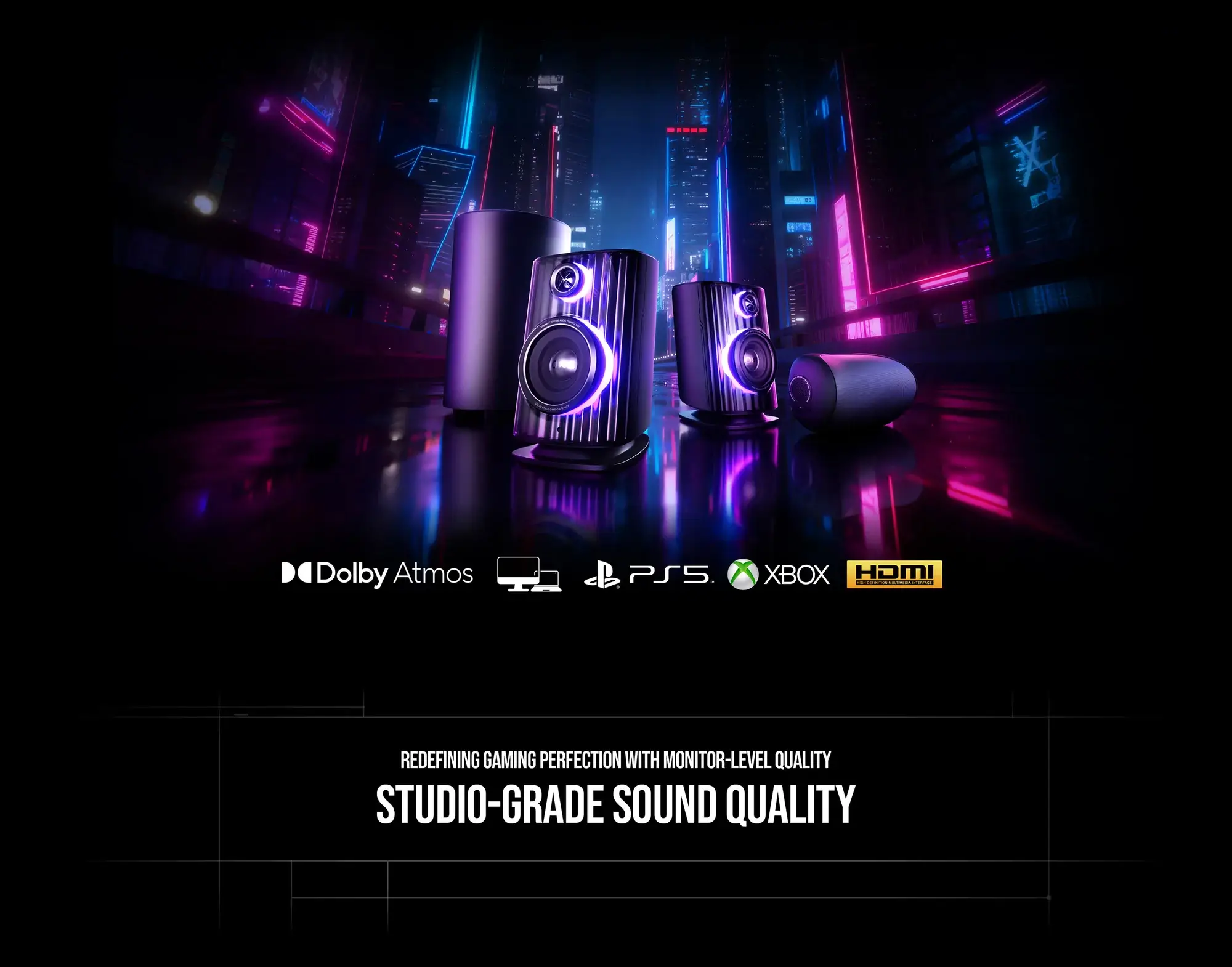
If you spend any real time looking for a desktop audio upgrade, OXS is a name that keeps showing up. The brand, which stands for Omni XSpace, describes its mission plainly: build an all-directional sound space. Founded in 2021 and backed by Jamo’s 56-year legacy in home theater acoustics, OXS has moved quickly from a niche newcomer to a brand with a full lineup of gaming soundbars and wireless headsets. Their products cover a real range, from a $79.99 wireless headset to a $699.99 flagship 7.1.2 channel sound system.
That price spread is intentional. OXS is trying to serve the casual gamer on a budget and the serious setup builder at the same time, and the product lineup actually reflects that rather than just marketing copy.
The Xspace Technology:
The thread running through every OXS product is Xspace, the brand’s proprietary spatial audio algorithm. It powers the virtual surround sound in their headsets and the upward-firing audio channels in their soundbars. On the headsets, Xspace processes audio into 7.1 virtual surround. On the soundbars, it works alongside Dolby Atmos certification to deliver overhead and directional sound from a compact bar sitting under your monitor.
The Gaming Soundbar Lineup:
The OXS Thunder lineup is where most buyers will start their research. The Thunder Lite at $149.99 is the entry point, a 2.0 channel compact bar with 2 full-range drivers, a bass tube, and a one-button Xspace mode. It connects via Optical, HDMI-ARC, AUX, USB-C, and Bluetooth, making it genuinely flexible for desktop or TV use.
The Thunder Pro steps things up to 5.1.2 channel Dolby Atmos with 8 tuned drivers, two upward-firing channels that reflect sound off the ceiling, and three genre-specific game modes tuned for first-person shooters, racing games, and MOBA titles. OXS also claims the Thunder Pro is 40% smaller than comparable devices in its class. The Thunder Pro+ takes it further with a 7.1.2 channel configuration, adding a wireless satellite neck speaker that connects at 5.8GHz with under 20ms latency. That neck speaker adds the two rear channels that a traditional soundbar cannot physically deliver, which is the genuinely novel part of the setup.
The Headset Side:
OXS offers two wireless gaming headsets: the Storm G2 at $79.99 and the Storm A2 at $129.99.
The Storm G2 uses 50mm full-range dynamic drivers with 7.1 virtual surround and connects via 2.4GHz wireless dongle at under 25ms latency. Three EQ presets and dual ENC microphones round out a solid spec sheet for that price point. The Storm A2 moves to 40mm neodymium drivers with hybrid active noise cancellation, under 20ms latency, and OXS’s self-developed Xspace 7.1 spatial algorithm. It also carries a detachable boom mic with 5-mic ENC for voice isolation in loud environments, and weighs in at 293g with the mic attached. Both headsets come in black and white colorways.
For anyone comparing OXS gaming headsets to options from Razer or SteelSeries in the same price tier, the ANC on the Storm A2 at $129.99 is a meaningful differentiator. Hybrid ANC at that price point is not common.
The Bigger Picture:
OXS is not trying to out-spec Sony or Bose in the premium consumer audio space. They’re specifically targeting gaming audio, a segment where spatial positioning, latency, and multi-device compatibility matter more than pure audiophile frequency response. Their Dolby Atmos certification across the Thunder Pro line adds third-party credibility to the Xspace claims, and the price points they’ve chosen are competitive for what each product delivers.
The brand is still relatively young, but the product range, the IFA presence, and the Jamo heritage behind the acoustics give it a foundation that buyers can evaluate on actual specs rather than brand recognition alone. Jamo is a Danish speaker brand with over five decades in home theater audio, now owned by Harman, and that lineage informs how OXS approaches acoustic tuning.
Stay ahead of the curve, explore our full Gadgets coverage.