Navya has been quietly doing what a lot of autonomous vehicle companies only talk about. Since 2014, this French mobility company has deployed self-driving electric shuttles in real cities, on real routes, with real passengers. By January 2025, Navya’s autonomous driving solutions had been deployed across 32 countries, with 220 vehicles in operation. That’s not a roadmap or a press release. That’s an actual installed base.
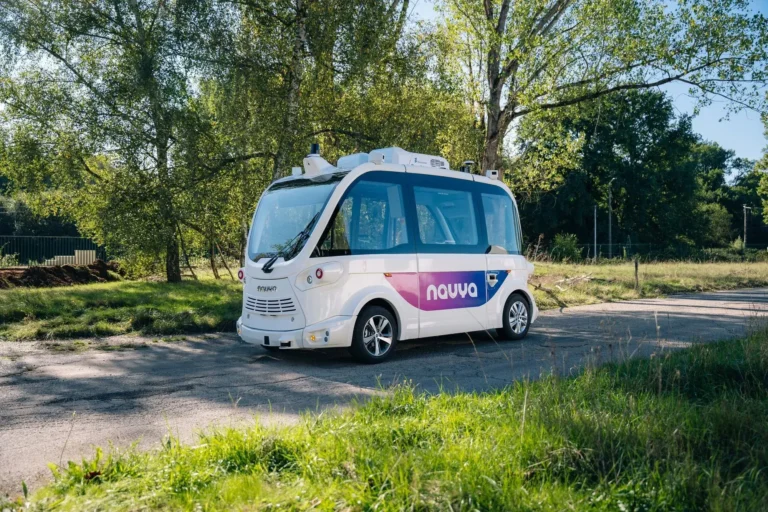
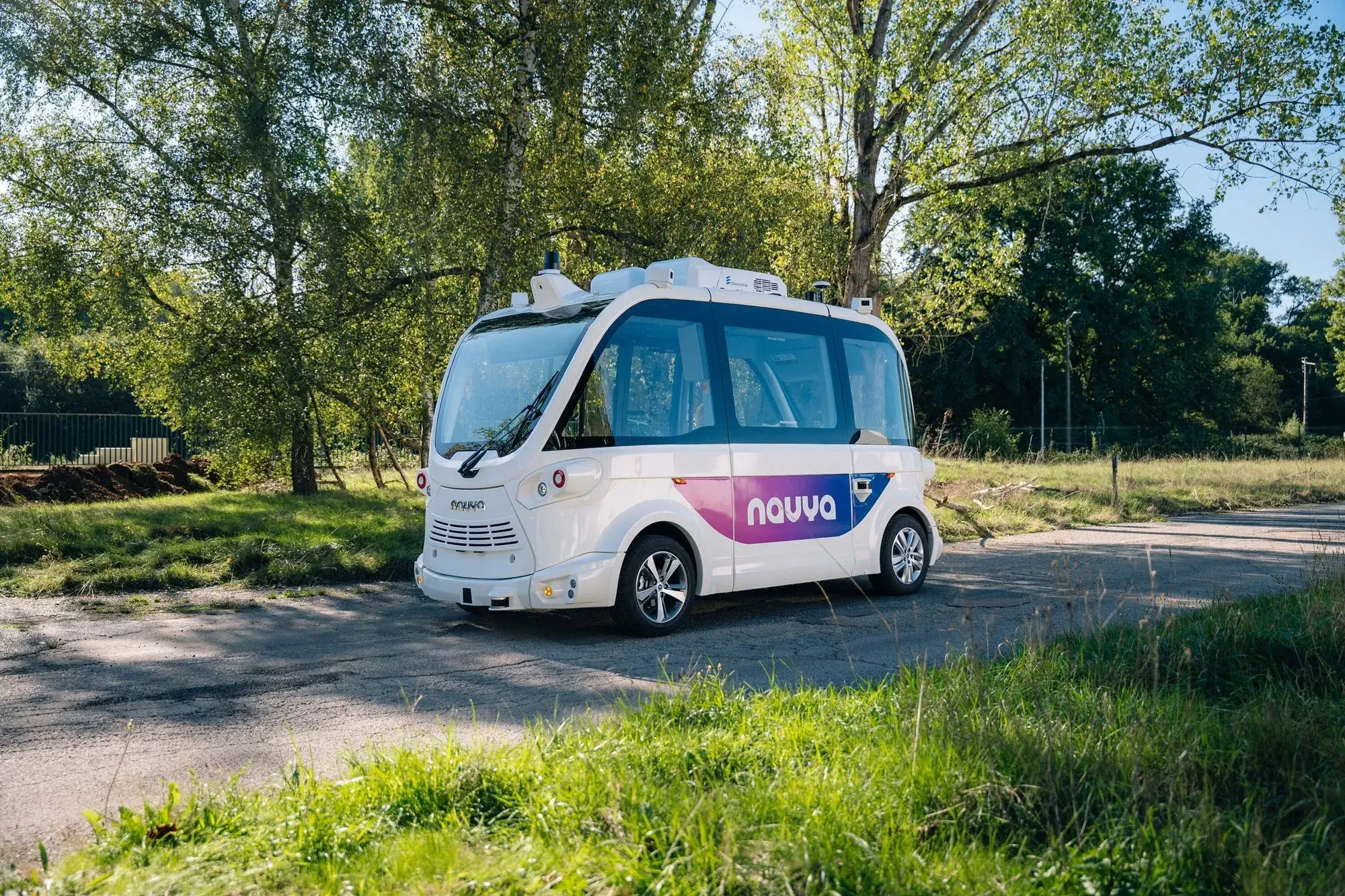
The company’s core product is the Autonom Shuttle, and it has gone through several generations. At the heart of the Autonom Shuttle Evo sits Navya Drive, which combines LiDAR, cameras, GPS, IMU, odometry, and radar technologies with vehicle controllers and in-house autonomous driving software to control the shuttle’s behavior. That’s a fully integrated stack built by one team rather than patched together from third-party components.
The EVO3 is the Current Focus:
The EVO3 is an all-electric, bidirectional autonomous shuttle designed for repeatable, low-speed routes in smart-city districts, campuses, and public-transport feeder services. It can operate at up to 25 km/h in autonomous mode and is engineered for tight spaces, frequent stops, and complex site layouts, with features such as four-wheel steering and the ability to handle remote operation services. For operators, it delivers up to 10 hours of operation depending on conditions.
In a January 2026 demonstration in Minamisatsuma City, Japan, the EVO3 carried up to 10 passengers on defined routes with a maximum speed of 18 km/h. The vehicle measures 4,780 mm in length, weighs 2,500 kg, and can travel approximately 100 km on a single charge. These are real operational numbers from a real deployment, not lab estimates.
Japan, a Strong Market:
Japan has become one of Navya’s most active deployment regions. In Japan alone, Navya has six regular operational cases and 50 demonstration test cases as of the end of 2024. One example is Hitachiota City in Ibaraki Prefecture, where the shuttle runs regular routes in urban areas, supports residents’ mobility, and connects with digital maps and local government apps to show real-time location and route information. The route was also expanded in February 2025.
These Japan deployments reflect a specific use case that keeps showing up across Navya’s work: connecting elderly residents with essential services in local districts, and supporting rural mobility on routes linking municipal buildings, schools, and community facilities. It’s a practical problem that a low-speed, driverless shuttle actually solves well.
The ASUS Partnership:
In March 2026, Navya announced a collaboration with ASUS focused on edge AI computing. Together, they are investigating the integration of ASUS IoT PE5100D edge AI hardware into the EVO3 platform to ensure the computing delivers the robustness, responsiveness, and in-vehicle performance required for future deployments. The PE5100D is designed to replace Navya’s existing hardware compute and is being tested alongside the SUS AIS software.
Level 4 Without a Safety Driver:
The Autonom Shuttle Evo is capable of operator-free driving on closed sites at SAE Level 4, which means the vehicle can handle all driving tasks within a defined operational domain without a human backup behind the wheel. That’s a meaningful threshold, and Navya has had commercial deployments that demonstrate it, not just simulations.
Operations and Fleet Management:
Running a fleet of autonomous shuttles requires more than the vehicles themselves. Navya addresses this with Navya Operate, an all-in-one fleet and vehicle management platform designed for safe autonomous mobility, enabling operators to supervise, monitor, control, configure, and schedule their fleet in real time using advanced tools that improve responsiveness.
This is an area where many autonomous vehicle companies have underinvested. Navya treating fleet operations as a core product, not an afterthought, is part of why its deployments have stayed running.
Who Actually Uses These Vehicles:
Municipalities, universities, airports, and private campuses are the primary buyers. These are controlled environments with defined routes where a Level 4 vehicle can operate fully within its design parameters. In tourist destinations, parks, theme parks, factories, and similar areas, Navya shuttles improve mobility and profitability, contributing to user loyalty and cost savings, and by connecting to public transportation networks, they create new value in transportation.
For anyone evaluating autonomous shuttle options for a campus, hospital, or smart city pilot, Navya’s 10-plus years of deployment data and its active presence in 32 countries make it one of the more grounded choices in this category. Its technology stack, fleet tools, and ongoing hardware partnerships signal a company that continues building on its foundation rather than starting over.
Stay ahead of the curve, explore our full Gadgets coverage.