Many smartphones break before the warranty does. Crosscall is solving that problem. The French manufacturer has spent over 15 years building rugged smartphones specifically for professionals who work in construction, logistics, agriculture, public safety, and other demanding outdoor environments. It’s not a side product for them. It’s the only thing they make.
Founded in 2009 by Cyril Vidal and based in Aix-en-Provence, Crosscall has sold over 4.5 million units and generates €114 million in annual sales across more than 20,000 retail points. That’s a meaningful footprint for a company that competes in a niche market dominated by global brands with far larger marketing budgets.
Built From Real Experience::
Cyril Vidal didn’t come from telecom. He worked in construction and had a passion for sailing, which made him aware of the need for robust handsets that could survive being dropped or getting wet. That firsthand experience shaped the company’s early identity. His first product, called the Shark, was billed as the first floating phone, built with a waterproof shell and two air pockets.
From that single product, Crosscall built a full lineup of durable mobile devices. Today, the brand has been selected for the French Tech 120 list multiple times, a French government program that identifies startups and scale-ups with the potential to become world-class technology leaders. That’s a strong signal of the company’s standing within France’s broader tech ecosystem.
What Makes the Hardware Different:
Crosscall’s phones go through rigorous internal testing before reaching the market. Devices undergo 40 drops from over 1.5 meters, including drops onto concrete and all six sides of the phone. The displays use tempered glass that is 60 percent thicker than standard Gorilla Glass. That’s not a spec sheet claim. It’s the kind of decision that protects a device in the real conditions workers actually face.
All Crosscall smartphones meet the IP68 standard, certifying resistance to immersion deeper than 1 meter for 30 minutes. Internal testing goes further, with prolonged immersion in salt water and chlorinated water at depths of up to 2 meters for 30 minutes. For anyone who has seen a waterlogged phone ruin a workday, that kind of reliability makes a practical difference.
Devices also comply with the MIL-STD-810H military standard, covering sudden temperature changes, certain chemicals, vibrations, and dust. Crosscall phones can operate in temperatures from minus 40 to plus 60 degrees Celsius, which is why they’re used by mountain rescue teams in the French Alps.
The CORE-M6 and What it Represents:
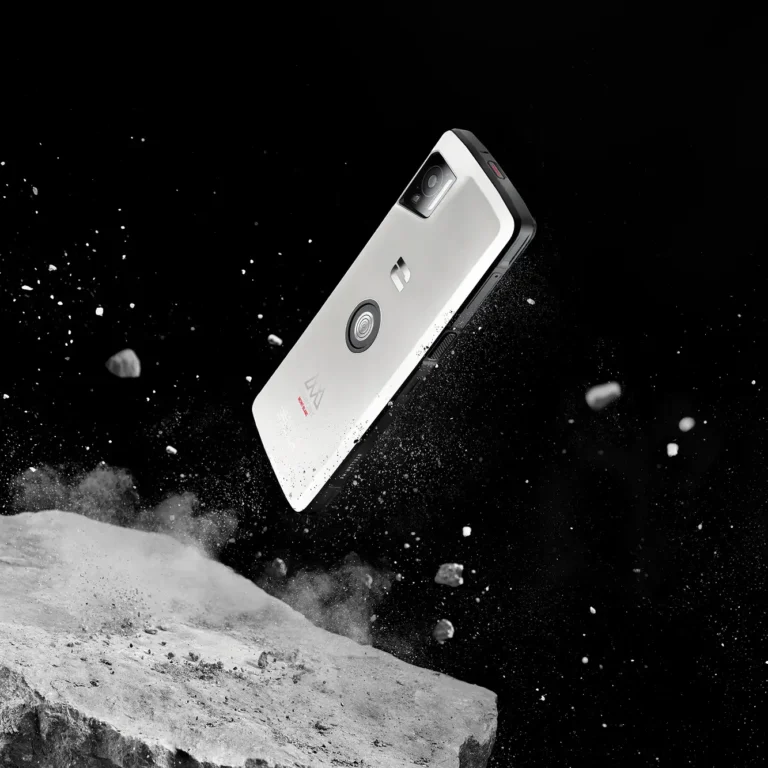
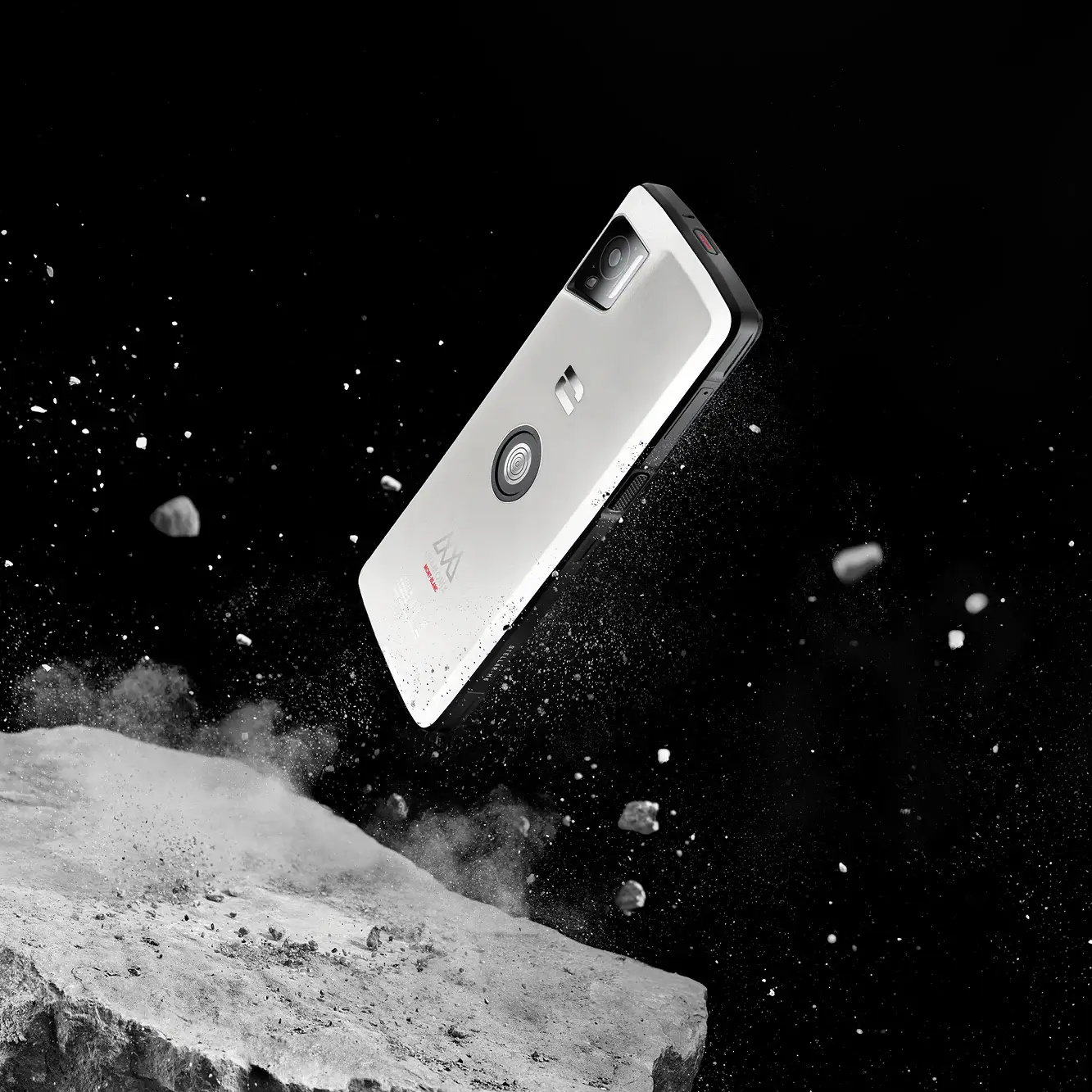
In early 2026, Crosscall launched the CORE-M6, a rugged smartphone built specifically for maintenance engineers, warehouse staff, agricultural workers, construction teams, and field technicians. It reflects where the company is pushing its hardware.
The CORE-M6 features a rigid magnesium frame, TPU shock-absorbing corners, and a display 60 percent thicker than average, with resistance to 300 concrete drops and full IP69K protection against high-pressure water jets. On the communication side, it includes a 102.5 dB loudspeaker with AI noise reduction up to 60 dB, three programmable action buttons including Push-to-Talk and SOS, and full 5G, dual SIM, eSIM, and NFC support.
The pricing is also practical. The CORE-M6 is available at €319 across authorized Crosscall retailers and on crosscall.com. That’s a reasonable entry point for a device businesses expect to use for years, not months.
Enterprise at Scale:
Crosscall isn’t just selling to individual buyers. The company currently supplies over 300,000 devices to customers, including Leroy Merlin, SNCF, and the French national police force. Those are large-scale deployments where reliability directly affects operations. SNCF, France’s national railway company, selected Crosscall devices after testing five different options, with durability over a three to four-year period being the deciding factor.
In 2024, Crosscall announced a collaboration with BT, bringing its rugged smartphones to UK businesses for the first time through BT’s enterprise network. That expansion signals the company’s growth beyond its French home base. Crosscall is now available in 14 countries worldwide.
The Repairability Angle:
This is where Crosscall’s model differs from most consumer smartphone makers. The CORE-M6 is fully repairable, with spare parts guaranteed for 10 years, a five-year manufacturer warranty including the battery, and security updates through December 2032 with OS upgrades up to Android 20.
Crosscall also offers a high repairability index across its range, which helps reduce the environmental impact of its products and extends their lifespan. For operators managing device fleets across field teams, this directly reduces the total cost of ownership over time. A phone that lasts five to seven years in the field is a fundamentally different financial proposition than replacing standard consumer hardware every two years.
The STELLAR-X5, another model in the Crosscall lineup, contains 26 percent recycled materials, and the company has earned a gold EcoVadis medal, placing it among the top 5 percent of rated companies globally for corporate social responsibility.
The Rugged Smartphone Market:
Crosscall is operating in a space that’s growing. The global rugged smartphone market is expected to grow at a CAGR of 4.5 percent between 2026 and 2030, driven largely by adoption in industrial and manufacturing sectors. Public safety, logistics, and field service are also key growth areas, all of which align directly with Crosscall’s existing customer base.
Stay ahead of the curve, explore our full Gadgets coverage.