
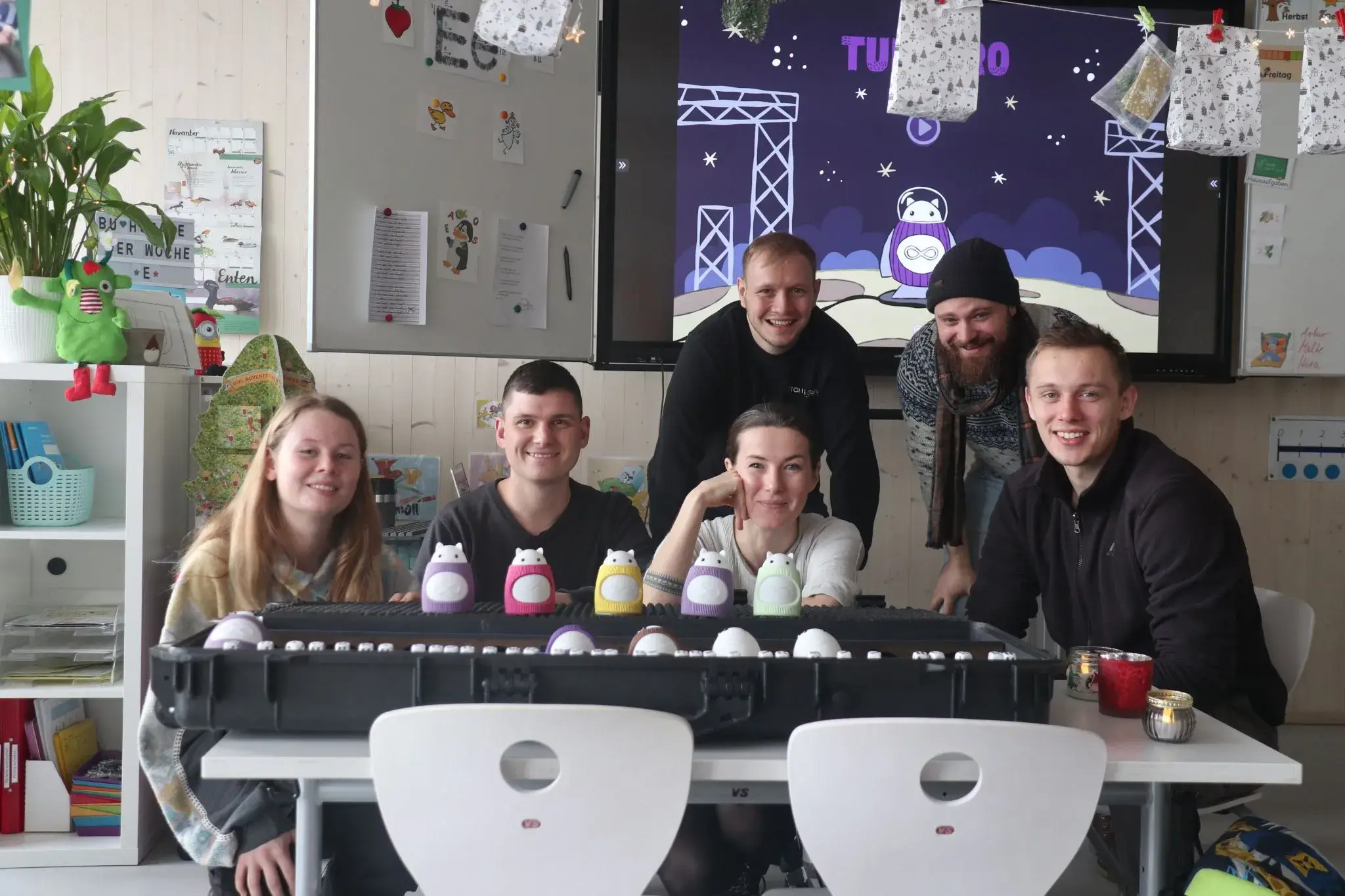
Berlin-based a2zebra launched TukToro in late 2024, and it’s addressing a problem most EdTech startups ignore: kids learn better when they can touch things.
The product combines a physical toy figure with dice and an AI-powered app. Children shake the figure, which contains sensors that detect dice rolls and feed them into math games on a tablet or smartphone. The approach isn’t entirely new – dice-based counting has existed for decades – but the execution shows where EdTech’s heading.
Physical + Digital:
TukToro works through three components.
First, there’s the physical figure itself. Kids fill it with up to four dice, shake it, and the internal sensors read the results. The figure connects via Bluetooth and provides real-time LED feedback.
Second, the iOS and Android app contains 15+ games built around preschool and primary school math curricula. Games like “Numbers in Love” and “Number Wall” adapt to individual progress.
Third, there’s AI-generated storytelling that wraps the math problems in narrative contexts. The platform tests content with Berlin elementary schools and the Center for Dyscalculia Therapy in Pankow.
Why This Matters:
German students scored their worst-ever PISA results recently. Up to 25% of children struggle with basic arithmetic, according to investor Kai Naujoks. Traditional worksheet-based learning isn’t working for many kids.
TukToro’s approach addresses three pain points: it gives immediate feedback (not possible with worksheets), adapts difficulty in real-time (not possible in most classrooms with 25+ students), and maintains tactile engagement (missing from pure-screen solutions).
The product targets ages 4-8, the window where number sense develops. Research shows multisensory learning improves retention, especially for students with dyscalculia or learning differences.
Technical Stack:
The hardware uses embedded sensors to detect dice orientation. LED lights provide instant visual feedback – green for correct answers, different colors for encouragement or hints.
The software side handles Bluetooth connectivity, game logic, and AI content generation. Parents and teachers can access analytics showing learning progress and recommended next steps.
The team’s iterating fast. CTO Andreas Häring built over 20 prototypes before settling on the current design. The app receives continuous updates based on classroom testing.
Market Position:
a2zebra raised €500K in early 2024 from notable investors including Tonies founders Patric Faßbender and Marcus Stahl. In June 2025, the company secured an additional $2.5M seed round to expand production and platform development.
The Tonies connection makes sense. That company proved parents will pay for connected physical toys that deliver educational content. TukToro applies similar thinking to math learning instead of audiobooks.
Production of the first 5,000 units started in 2024. Current delivery times run 2-3 months due to demand.
What’s Different:
Most EdTech falls into two camps: pure software (apps, platforms) or pure hardware (learning tablets, coding robots). Few products genuinely integrate both.
TukToro’s closest competitors include TouchMath (multisensory math instruction) and traditional Montessori materials. But those lack adaptive AI. Pure app-based competitors like Prodigy offer AI but no physical component.
The dice mechanism specifically addresses a gap. Elementary school teachers use dice for probability and counting exercises, but they can’t track individual student progress across dozens of kids. TukToro automates the tracking while keeping the tactile engagement.
Practical Constraints:
The product requires a tablet or smartphone, which not all families own. The company prices TukToro at €79.99 for the base set – not cheap, but comparable to other educational toys.
Battery life and Bluetooth connectivity could be friction points, though the team includes USB-C charging and tested extensively in real classrooms.
The AI-generated stories raise questions about screen time. a2zebra positions this as “child-friendly digitalization,” but parents will decide what that means for their kids.
Bottom Line:
TukToro represents a specific bet: that the future of early education tech isn’t purely digital, but hybrid. Physical objects matter for young learners, especially when building foundational skills like number sense.
Whether this approach scales beyond early math into other subjects remains to be seen. For now, the team’s focused on one thing – making arithmetic feel less like work and more like play for 4-8 year olds.
The product works. Whether it becomes the standard for early math education or remains a niche solution depends on factors beyond product quality: pricing, distribution, and whether schools adopt it systematically versus parents buying individually.
For EdTech founders: watch how a2zebra balances hardware costs with software margins. That’s the real challenge in phygital products.