Europe’s DeepTech startups have a problem. They can innovate, they can build prototypes, and they can prove their science works. But when it’s time to scale manufacturing and compete globally? That’s where most hit a wall.
Kembara announced a €750M first close toward a €1B target, making it Europe’s largest dedicated DeepTech growth fund. The fund is now actively investing in Series B and C companies after two years in stealth mode.
The timing matters because the numbers tell a stark story about European DeepTech funding gaps.
The Scale-Up Problem:
DeepTech now represents 28% of all European venture investment. Yet 97% of DeepTech funds remain below €300M – too small to lead the €50M-€100M rounds that capital-intensive companies need to scale.
The result? Only 3% of European DeepTech companies successfully raise Series B or C rounds, despite Europe producing 28% of global DeepTech innovation.
Companies either get acquired early, relocate abroad, or never reach their potential. Think Lilium, the German eVTOL company that went bankrupt in 2024 despite breakthrough technology – largely because it couldn’t secure adequate growth capital.
Why €750M Changes Things:
Kembara’s fund size lets them write checks between €15M-€40M initially, with follow-ons up to €100M per company. They’re planning to back approximately 20 companies total.
That €100M ceiling is more than the entire size of most European DeepTech funds. It’s the difference between scaling a pilot production line and building a real manufacturing facility.
The European Investment Fund anchored the raise with €350M under the European Tech Champions Initiative. The remaining commitments came from tier-one European institutional investors who recognize that Europe’s university spinouts need industrial-scale capital to compete.
Yann de Vries, Co-Founder and General Partner, emphasizes: “We’re not a generalist fund trying to do DeepTech. Each partner has spent 15-30 years exclusively in these sectors. We’ve been operators, we’ve built companies, we’ve taken them public. We know how to derisk complex hardware, navigate regulatory frameworks, and structure sophisticated financing.”
The Partnership Team:
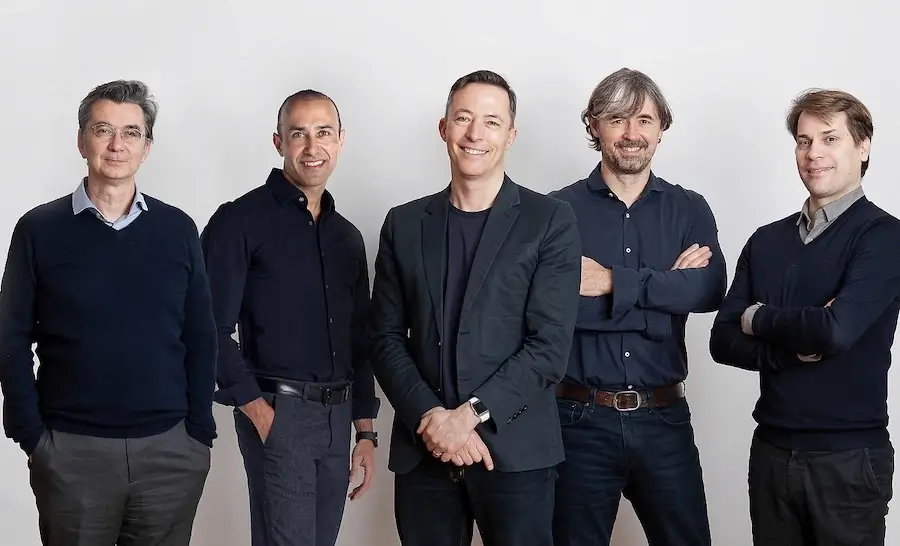
The fund’s leadership brings over 100 years of combined DeepTech experience:
- Javier Santiso (Founder/GP): CEO of Mundi Ventures, former executive at Malaysian sovereign wealth fund Khazanah
- Yann de Vries (Co-Founder/GP): Former Atomico partner, ex-Lilium senior executive
- Robert Trezona (GP): Founder of Kiko Ventures, ex-IP Group investor
- Pierre Festal (GP): Partner at Promus Ventures
- Siraj Khaliq (Senior Strategic Advisor): Former Atomico partner
Their prior investments include SpaceX, OpenAI, and Groq. More importantly, they’ve lived through the failures – de Vries’s experience at Lilium gave him front-row access to what happens when growth capital dries up for hardware-intensive ventures.
Javier Santiso, Kembara Founder and General Partner, says: “Europe is at the beginning of a second Renaissance. Just as the original had the Medici family to fund innovation, Europe’s DeepTech champions today need significant local growth-stage capital at scale. With €750M committed, we’re backing Europe’s most ambitious founders leading this change.”
Investment Focus Areas:
Kembara targets sectors where Europe has strong research foundations but needs capital to commercialize:
- AI and machine learning infrastructure
- Quantum computing
- Robotics and automation
- Clean energy and climate tech
- Space systems and aerospace
- Advanced materials
- Semiconductors
- Dual-use technologies
The fund deliberately focuses on Series B and C stages. At this point, technical risk is largely derisked – the science works, early customers are onboard. What’s missing is the capital to scale manufacturing, expand globally, and build defensible market positions.
Santiso, add: “Kembara is uniquely positioned to generate outsize returns because we invest where DeepTech economics are most asymmetric. At Series B and C, science risk has been largely removed, but upside remains uncapped. Combined with Europe’s world-class early-stage pipeline and over €1 trillion in new public and private capital targeting DeepTech, this creates a generational opportunity.”
What Makes This Different
Three things set Kembara apart from typical VC funds:
First, they understand blended financing. De Vries learned from Lilium that raising only equity becomes unsustainable for capital-heavy companies. Kembara works with portfolio companies on financing strategy that includes non-dilutive capital sources.
Second, they’re operator-focused. The partners have built, scaled, and taken DeepTech companies public. They know the difference between software scaling and hardware scaling.
Third, timing. DeepTech unit economics have improved dramatically – GPU costs are down 1,000x, satellite launch costs down 10x, genome sequencing down 100,000x over the past decade. Meanwhile, geopolitical shifts are making strategic autonomy in critical technologies more valuable than ever.
Why Now Matters:
Europe invests billions into early-stage climate and DeepTech startups. A recent report shows too many fail at Series B not because the technology doesn’t work, but because they can’t access growth capital.
The gap is widening. In 2025, European DeepTech companies raised €13B total. Robotics alone raised €1.6B across companies like Norwegian startup 1X and German company Neura Robotics. But without funds like Kembara, many of these companies face the same fate: get acquired by foreign entities or relocate to access capital.
European governments and institutions are waking up to this. The European Tech Champions Initiative specifically targets this funding gap. Over €1 trillion in new public and private capital is being deployed toward DeepTech across Europe.
Kembara’s €750M first close signals that private institutional investors see the same opportunity.
What This Means:
For founders building in quantum computing, advanced robotics, climate infrastructure, or similar sectors, Kembara represents what’s been missing – growth capital at industrial scale without forcing premature exits or relocation.
For the European tech ecosystem, it’s a test case. If Kembara succeeds in turning Series B companies into global category leaders while keeping them European-anchored, it proves the model works. Other funds will follow.
The fund is actively investing now. With offices in Madrid, London, Barcelona, and Paris, they’re positioned across Europe’s major DeepTech hubs.
The question isn’t whether Europe can innovate in DeepTech – it clearly can. The question is whether Europe can scale those innovations into trillion-dollar companies. Kembara’s €750M says it’s worth trying.