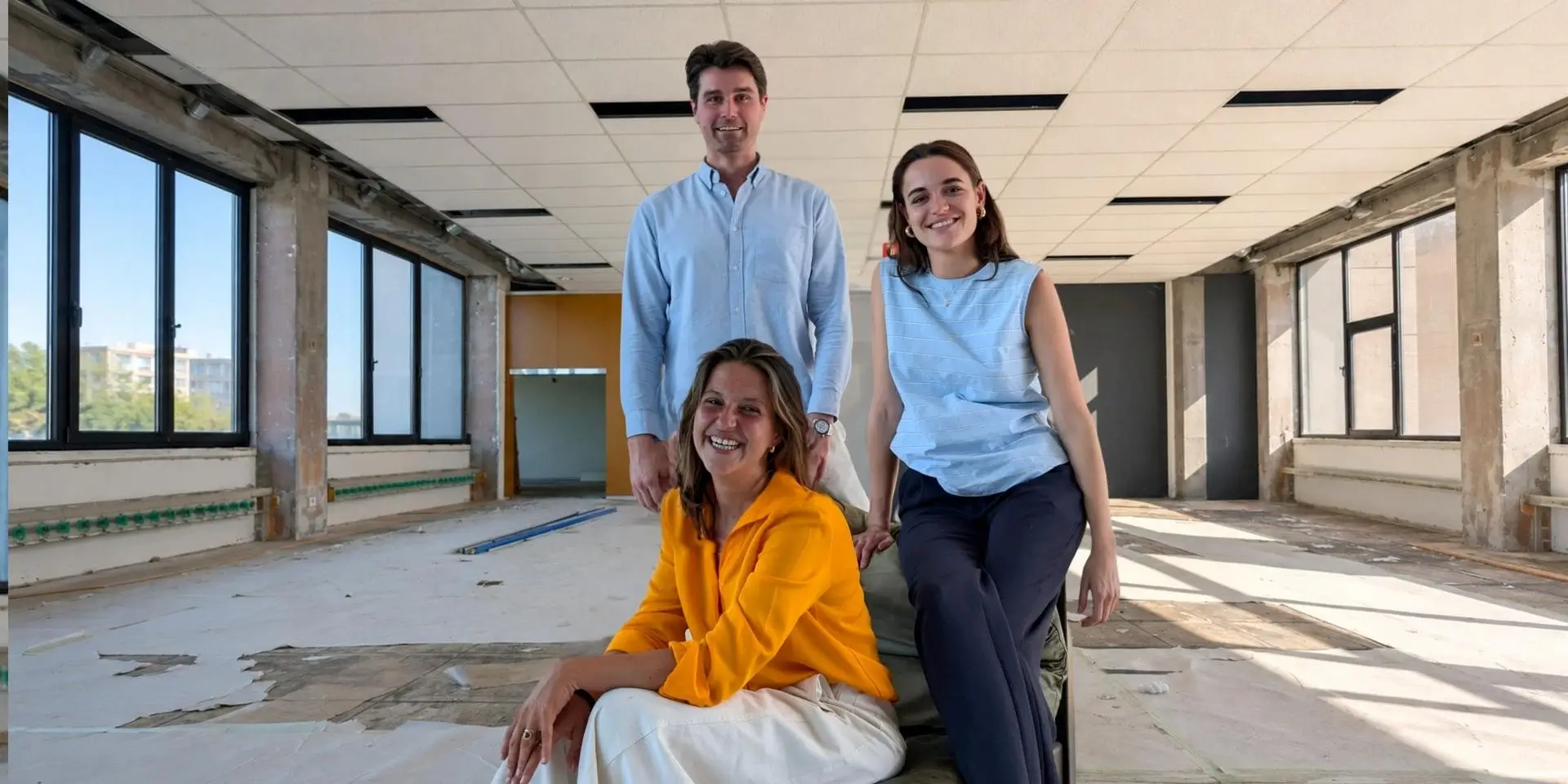
BuddyRise, a Ghent-based startup with offices in San Francisco, is launching Buddy: an AI health companion that tracks symptoms, identifies triggers, and guides daily habits for people living with autoimmune conditions. The platform was co-founded by MS patient and former UN AI expert Charline d’Oultremont, neuroscientist Céleste Cockmartin,n and Ben De Smet, co-founder of Y Combinator-backed interview scale-up Conveo.
Charline d’Oultremont was working for the United Nations when her body suddenly stopped. The diagnosis was devastating: progressive MS. Doctors told her to prepare for a life in a wheelchair. What followed was three years of relentless lifestyle tracking: photos of every meal, notes on every symptom, protocols marked in fluorescent highlighter. Slowly, progress became visible. Today, Charline has been in remission for three years.
Charline d’Oultremont, CEO and co-founder of BuddyRise, says: “I spent three years tracking almost every variable in my life to understand my own disease. Eventually, I reached remission, but I had to figure it all out entirely on my own. Most people don’t have the time, energy, or knowledge to do that. BuddyRise wants to give every autoimmune patient the daily lifestyle support that simply isn’t there today.”
Autoimmune diseases affect around 10% of the global population, roughly 800 million people. MS, lupus, rheumatoid arthritis, Crohn’s disease, and psoriasis all fall into the same category, in which the immune system turns against the body. 80% of all autoimmune patients worldwide are women, yet research has historically relied on male subjects, and medication has been calibrated for male bodies. Hormonal cycles, menstruation,n and the postpartum period are rarely factored in, despite their measurable impact on disease progression.
Buddy for Doctors and Patients:
That observation is where BuddyRise began. Buddy, the AI companion at the heart of the app, talks to patients every day via voice or text and remembers everything they share: symptoms, sleep, meals, mood, and small wins. With every conversation, the companion builds a personal profile that gets smarter over time, recognising patterns, mapping triggers,s and suggesting small, actionable steps patients can take between appointments. Patients see their doctor for an average of 30 minutes a year. BuddyRise fills in the rest.
The platform is clinically grounded and tailored to each condition and each body. For an MS patient like Charline, sunlight is a form of medicine. For a lupus patient, that same sunlight is a trigger. A patient in the postpartum period receives an adapted plan, given the heightened risk of many autoimmune conditions during this period. Patients can export their full data history to share with their doctor, giving a clinician a complete picture of symptoms, triggers, and recovery patterns in minutes.
5,000 Beta Users:
BuddyRise was founded in 2025 with offices in Ghent. Charline d’Oultremont (CEO) spent five years as an AI expert at the United Nations. Céleste Cockmartin (CTO) studied neuroscience, worked at the UN, and taught herself to code from scratch to build the full app. Ben De Smet (COO) specialised in MedTech at McKinsey and previously co-founded interview scale-up Conveo, backed by Y Combinator. The startup is supported by Antwerp-based investment fund RDY Ventures. Ahead of its public launch, BuddyRise already counts 5,000 beta users in 11 countries, covering more than 50 different autoimmune conditions.
Ben De Smet, COO and co-founder of BuddyRise, concluded: “800 million people worldwide live with an auto-immune condition, yet no one today has a clear picture of how those patients actually live day to day: what triggers a flare, how they recover, what works. BuddyRise maps that for the first time. We are preparing a funding round to bring this to an international scale. By the end of this year, we want to grow from 5,000 to 100,000 users worldwide.”