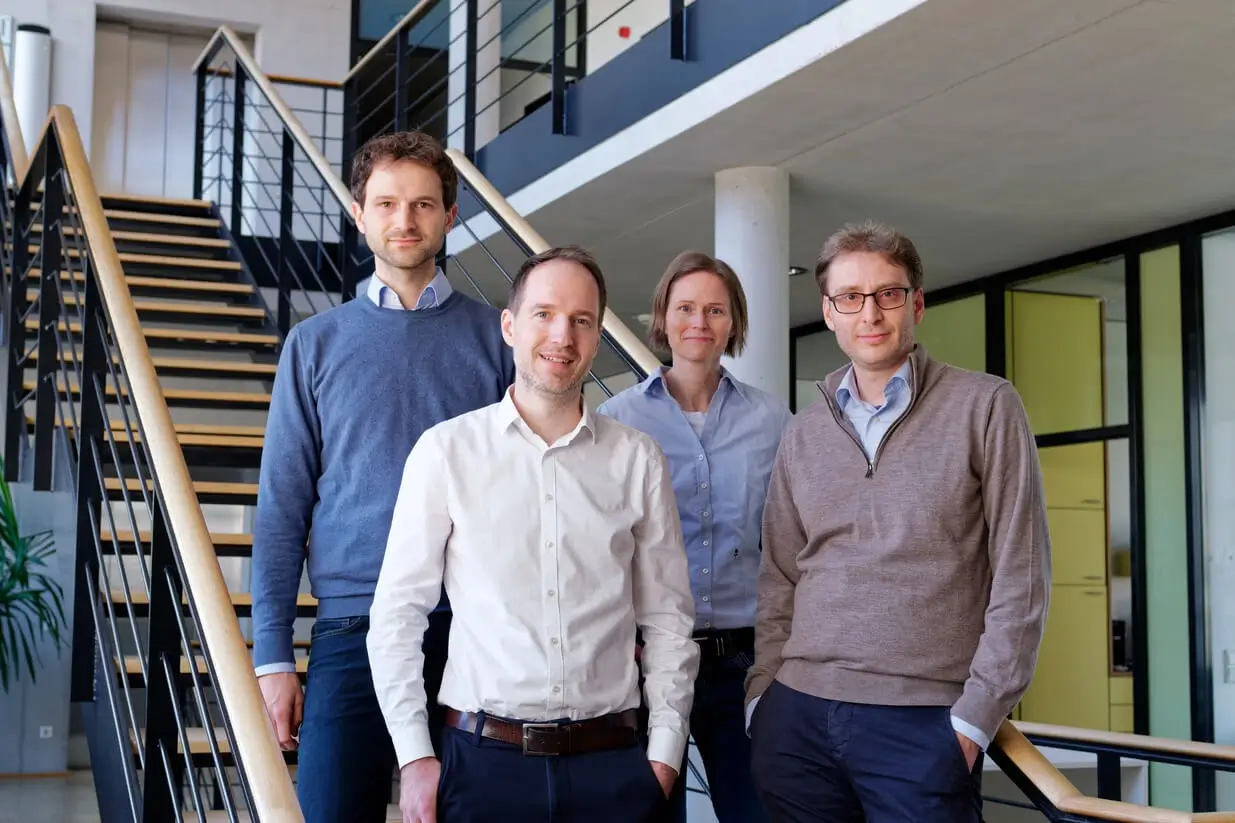
Rosa Mach is a physicist turned founder who co-built one of Spain’s most accessible creator tools. She co-founded atom.bio in 2020 alongside Daniel López, who serves as CTO. Today, over one million creators use atom.bio as their primary link-in-bio solution.
From Physics to Founders:
Before atom.bio, Rosa had a research career in physics. She held a postdoctoral position at the Istituto Italiano di Tecnologia (IIT) in Genoa, working on magnetic metamaterials and plasmonics, with a focus on magnetic field manipulation. Her academic work has been cited 171 times, covering areas including metamaterials, optics, and electromagnetism.
That research background didn’t follow a straight line into tech entrepreneurship. Rosa had been an Instagram yoga content creator, and she and her co-founder Dani had previously attempted a yoga e-commerce venture that failed. That experience made clear firsthand how difficult it is for entrepreneurs and creators to get started on social media, particularly without design skills, a budget for a website, or existing connections. So they built the tool they couldn’t find, with no prior coding knowledge, no marketing background, and no outside funding to start.
The Case for atom.bio:
Impact of Rosa Mach on the Creator Economy:
atom.bio lets users create a fully customizable one-page website that consolidates links, social media profiles, and business information into a single shareable destination. The product serves restaurants, freelancers, gyms, and content creators alike.
What’s different about the model is the pricing approach. The platform delivers premium features without the premium price, with the optional paid tier at $3.99 per month simply removing a small ad banner. Everything else, including full customization, advanced analytics, and unlimited links, is free. Unlike most competitors, atom.bio does not restrict core features to paid tiers, giving every user access to the full feature set from day one.
Building With an MBA and a Scholarship:
Rosa went back to formal education while building the company. She was awarded an IESE Entrepreneurship Scholarship for her MBA at IESE Business School, University of Navarra, in 2021. These scholarships are awarded to professionals who have displayed a high level of entrepreneurial spirit, creativity, and resilience, with applicants expected to have a proven track record of entrepreneurship.
atom.bio also went through the Acelera accelerator program. Her mentor there noted publicly on LinkedIn that atom.bio was already a success before it arrived at Acelera. That external validation, alongside the IESE recognition, reflects how Rosa and her team had built real traction early, without waiting for institutional support to do the work first.
Content, Community, and Reach:
Rosa is also active as a content creator in the creator economy space, publishing on Medium under the angle of link-in-bio strategy and social media marketing. Her Medium bio describes her as a “Physics PhD turned creator tool builder,” which sums up the arc of her career in a direct way.
atom.bio’s stated mission is to increase the visibility of local businesses, B Corps, non-profits, and NGOs through the power of social media. That’s a broader goal than most link-in-bio tools aim for, and it’s reflected in who the platform actually serves. Rosa and her team have built a product that works for a single freelancer and for a small nonprofit equally.
The Rosa Mach story is a useful reference point for anyone building in the creator tools space. She moved from academic research into content creation, then into building the infrastructure that creators actually need. Each transition was built on direct experience rather than theoretical market analysis, and the product’s one million users reflect that grounding. atom.bio is one of the top free link-in-bio tools for creators and small businesses in Europe, competing with Linktree and Beacons without restricting features behind a paywall Follow TECHnicalBeep’s Women in Tech series.