Most energy companies still rely on annual estimates and outdated emission factors to report methane. Regulators no longer accept that. The EU Methane Regulation, in force since August 2024, now requires site-level, measurement-based data from gas importers. The OGMP 2.0 framework has raised the bar further, demanding reconciled source-level and site-level reporting at its highest tier. AIRMO, a München-based startup founded in 2022, is building the tools to close that gap.
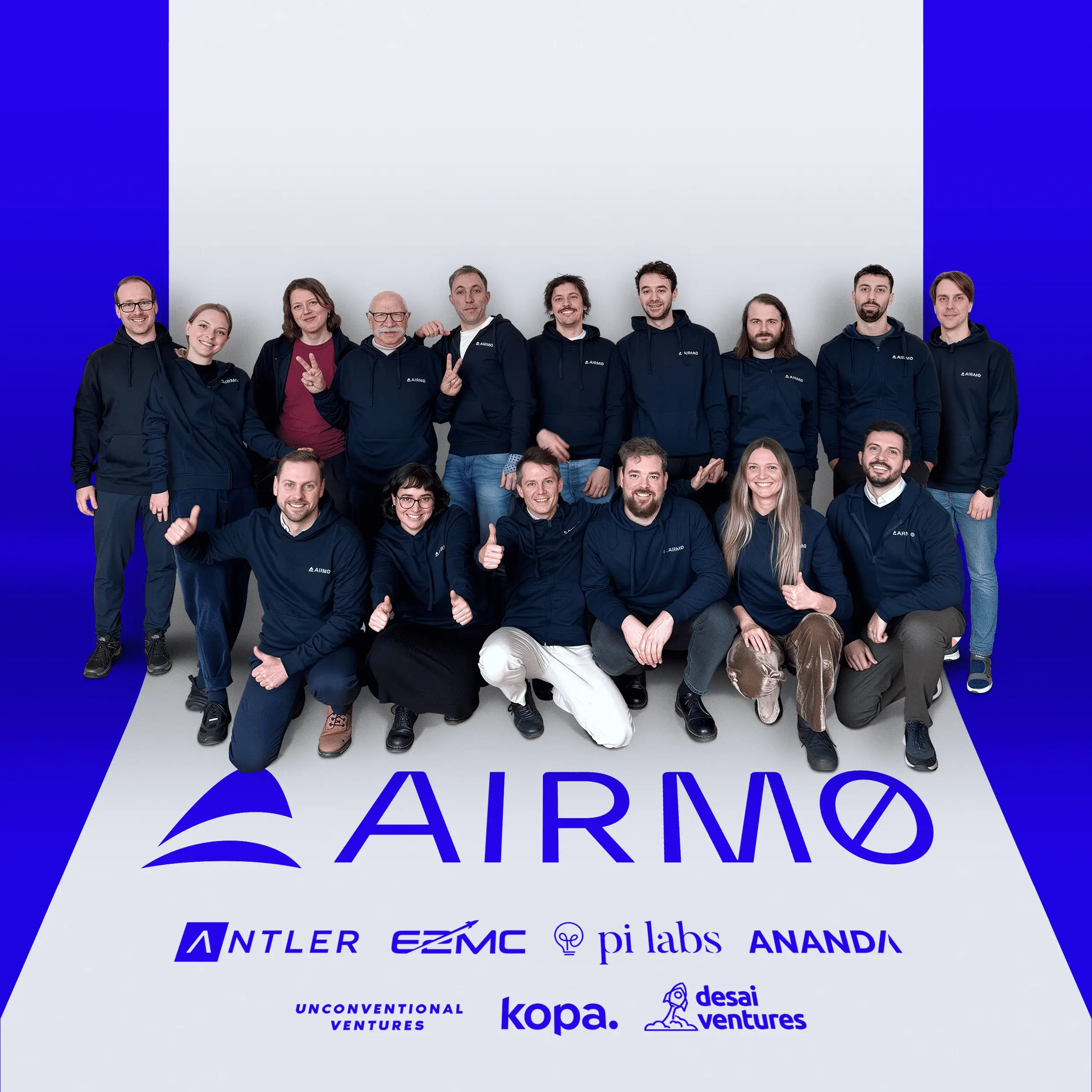
The startup has closed a €5 million seed round led by Ananda Impact Ventures, with participation from Unconventional Ventures, kopa ventures, Desai Ventures, Hypernova, and strategic investors Matthias Fackler and Francesco Starace from EQT Partners.
The round also brings together AIRMO’s earliest believers, Antler, Findus Ventures, Pi Labs, and E2MC (Earth-to-Mars Capital), who have backed the company from the start. This follows AIRMO’s 2023 pre-seed round of €5.2 million, which included a €3.7 million contract from the European Space Agency through its InCubed programme.
Regulations Are Tightening Now:
The EU Methane Regulation is in force since August 2024 and now requires gas importers to report emissions with site-level data. The OGMP 2.0 framework has moved from voluntary to near-mandatory for energy operators doing business in Europe. Most existing monitoring approaches still rely on annual snapshots and outdated estimates. AIRMO is built around something different: actual measurements.
Energy operators who cannot produce measurement-based emissions data face fines, reporting delays, and growing ESG scrutiny from investors.
The Tech Behind It:
AIRMO’s core product is a proprietary sensor that combines a shortwave infrared (SWIR) imager with micro-LiDAR technology. According to the company, the system is twice as accurate as existing monitoring technologies and can detect a methane leak roughly the size of a car from 500 kilometers above Earth.
The company is already running commercial operations on aircraft and drones across Europe, Central Asia, and the MENA region. The satellite mission, planned for 2027 through a partnership with EnduroSat, is the next step in scaling from site-level campaigns to continuous global monitoring. CEO Daria Stepanova, a rocket scientist who has completed 12 satellite launches and founded three companies, leads the company’s technical and commercial direction.
How AIRMO’s Services Work:
AIRMO offers operators a full stack for LDAR (Leak Detection and Repair) and OGMP 2.0 compliance. Drone-based surveys use a UAS-mounted TDLAS sensor that weighs just 850 grams, can detect leaks as small as 1 gram per hour from 50 meters, and mounts on standard DJI drones. Aircraft-mounted systems cover over 200 square kilometers per flight hour using SWIR and LiDAR sensors, making them practical for pipeline corridors and large upstream fields.
On the fixed-site side, AIRMO’s continuous monitoring system uses a 2D SWIR spectral imager with AI-powered quantification, designed for terminals, tank farms, and flare systems that need real-time, verifiable data. The company also provides Optical Gas Imaging (OGI) using FLIR cameras, and Flame Ionization Detectors (FID) for regulatory-grade spot checks. All of these feed into AIRMO’s proprietary reconciliation software, which aligns source-level and site-level data into UNEP OGMP-ready reporting templates.
Who Is Running It:
The leadership team carries meaningful technical depth. Co-founder and CSO Dr. Errico Armandillo spent 28 years as ESA’s Head of Optoelectronics and is a LiDAR expert. CTO David Vilaseca brings 15 years building space optical instruments. Board Chairman Christoph Grobbel co-founded South Pole, the carbon markets company that scaled to unicorn status.
AIRMO currently operates out of three offices: Weßling (Germany), Esch-sur-Alzette (Luxembourg), and Abu Dhabi (UAE) through its MENA entity at Hub71. The new funding will expand that Abu Dhabi presence further, given the density of oil and gas infrastructure across the Gulf region.
The Road Ahead:
The OGMP 2.0 Gold Standard at Level 5 requires reconciling component-level measurements with independent site-level surveys. Most operators are not set up to do that in-house. AIRMO’s full stack, from drone surveys to satellite monitoring, gives energy companies a single workflow to meet those requirements without building internal capability from scratch.
For anyone working in ClimateTech, energy compliance, or satellite-based earth observation, AIRMO is a useful company to follow. The combination of an operational airborne business, a growing client base, and a clear satellite roadmap puts them in a strong position to scale EU Methane Regulation compliance from campaign-level to continuous infrastructure-wide coverage.